How a person was found in another country within nine days and contact with the family was restored
After labor migration, a man stopped responding, and the family received only conflicting information. The check confirmed that he was alive and safe, and contact was restored only after his consent.
- 4 countries - Ukraine, Poland, Germany, the Netherlands
- 9 days - until confirmation of wellbeing
- consent - mandatory condition for contact
- address not disclosed - the principle of working with privacy
A sensitive, anonymized case. Identifying details have been changed; the publication does not disclose the client, the person found or the participants. The employer, address, route and legal status of the person found are not published in any volume.
Проверено: 3 августа 2026Время чтения: 15 минутBLACKFILE Editorial & Investigations Team
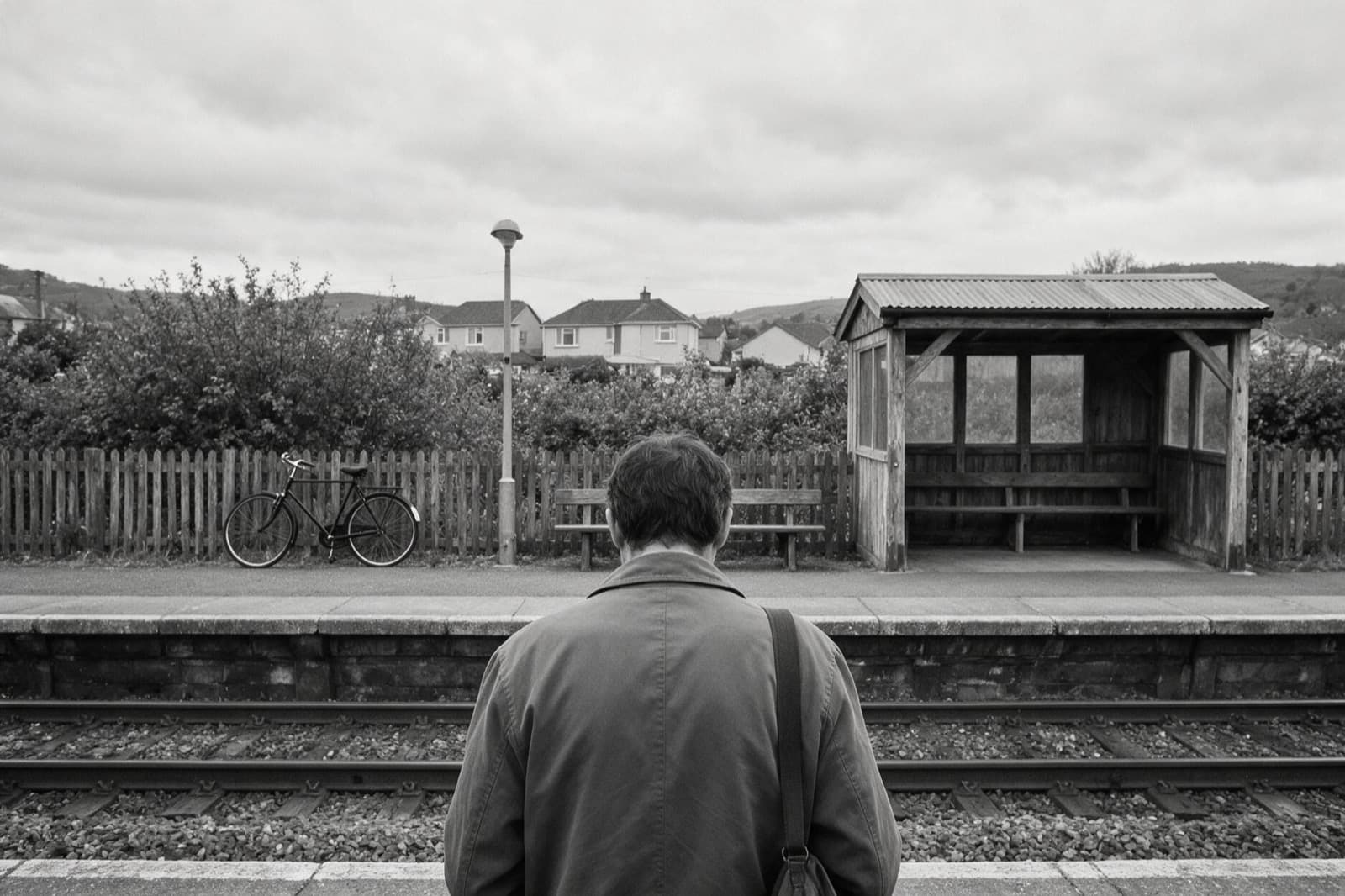
The task was framed as a wellbeing check and, subject to his consent, restoration of contact. Not as establishing an address for transfer to the client.
Four countries with differing volumes of legally accessible information on private individuals. Specific cities, addresses and routes are not disclosed in the public version.
From agreeing the legal boundaries to confirming wellbeing. The time that followed was taken up by obtaining consent and preparing contact - this stage cannot be accelerated.
The person found made his own decision to make contact. Had he refused, the family would have received only confirmation that he was alive and safe.
The combination of directions was selected to fit the legal limitations of each of the four jurisdictions separately.
Names, exact dates, addresses, routes, employer and legal status have been changed, generalized or excluded. The publication has been agreed to an extent that does not allow the participants to be identified.
Why the family lost contact
The enquiry came from the brother. Several years ago the man went abroad for work; at first he called regularly, then less often, then only on major dates. The last conversation took place more than a year ago and was brief. After that - nothing.
What raised concern was not the silence itself, but its character. The phone number ceased to exist, messenger accounts stopped updating, letters remained unread. People whom the family asked gave different answers: one said he had seen him in another country, another said he had long since returned, a third said he had heard about a move. None of the messages was confirmed.
By the time of the enquiry, the family had gone through the usual cycle for such a situation. They had turned to social media, posted on community forums, asked acquaintances to inquire. Each such step produced a new version, and none of them ended in anything definite. A year of such searching wears a person down more than the absence of news.
The task was formulated in extremely narrow, and at first glance modest, terms: to establish whether the person is alive and whether he is safe. Not to find an address, not to determine why he does not call, not to bring him home. Only that.
This formulation was chosen not out of caution but as a matter of substance. An adult has the right not to maintain contact with relatives, to change country, and not to explain his decisions. A check can confirm that he is safe. A check cannot and should not bring him back to the family.
The family did not need an address. It needed to know that the person was alive and safe - what happened after that was for him to decide.
What data was available at the outset
The source material in missing-person matters almost always looks the same: many memories and little that can be verified. The analysis begins by separating one from the other.
- 01
Family relationship confirmed by documents
The applicant confirmed the relationship with documents. This is the basis of the legitimate purpose: without a confirmed lawful interest, a check does not begin under any circumstances.
- 02
Outdated contact information
Phone numbers and e-mail addresses the family had used for years. None of them worked at the time of the enquiry, but on their own they remained points of reference in time.
- 03
Information on labour migration
A general idea of which country the person had originally gone to and what he was expected to do there. No organisation names and no employment details - this information was not established in the project.
- 04
Dates of the last confirmed contacts
Points at which contact still existed: the last call, the last message, the last mention by mutual acquaintances. These set the time frame of the check.
- 05
Conflicting reports from third parties
Four countries came up in acquaintances' conversations. All of them were treated as hypotheses requiring verification, and none as fact.
- 06
Circumstances not relevant to the task
Part of what the family reported had no bearing on the question of the person's safety: old grievances, family conflicts, speculation about motives. This was not taken into the work.
How false leads were filtered out
The first two days of work produced not new information but a narrower field of search. This is a normal and most underrated stage: a version correctly ruled out saves weeks.
The main difficulty in searching for people is the frequency of matches. The same first and last name can belong to dozens of people in one country, and combined with an approximate age and a general region of origin - to hundreds. Any match on a single criterion means only that verification is needed, not that a finding has been made.
For this reason, each hypothesis was checked against several independent grounds at the same time. A name match without an age match was discarded. A name and age match without a continuous connection to the person's history as known to the family was discarded as well. The governing principle was: what confirms is not a single match but a combination of several independent, non-contradictory indicators.
Reports from acquaintances were checked separately. Two of the four directions the family had been told about were not confirmed: the information behind them traced back to a single source and, judging by the dates, described events more than two years old. One direction turned out to be the result of confusion with a person of the same surname.
By the end of the third day, one of the original four hypotheses remained, and it was confirmed by several independent grounds. The family was told about this honestly and without delay: not "we found him," but "we have ruled out three of the four options and are working with the one that remains."
The project did not involve access to devices, accounts or correspondence, covert surveillance, contact under a false pretext, or any actions capable of creating a sense of being watched or causing alarm to the person.
Verifying the route across four countries
Four countries did not mean four identical checks. The scope of information about private individuals that can lawfully be obtained differs fundamentally, and in each country the check meant different actions.
The overall framework, however, was the same and strict. The work proceeded only on lawfully available grounds and only to the extent necessary to answer the question of the person's safety. Anything beyond that question was not collected - even where it was accessible.
Restoration proceeded on the principle of continuity in time. Not "where is the person now", but "what sequence of events connects the point known to the family with the present day". Each link in this sequence had to rest on a verifiable basis, and gaps were recorded as gaps, not filled in with assumptions.
By the ninth day a coherent picture had formed: the person is in the Netherlands, in the Rotterdam area, living and working openly, following an ordinary routine. No indication of coercion, dependent status or restriction of freedom was established.
The public formulation of the conclusion matters here. The absence of established risk indicators is a result of verification, not a guarantee. We confirmed what is visible and verifiable, and stated directly what the verification does not show.

The line of search ends not in a coordinate, but in consent
Five stages of the work. The point marked in red is the moment that changed the client's decision. Schematic representation: methods, sources and identifying data are not disclosed.
Факт. Confirmed kinship, outdated contacts and four conflicting versions of geography.
Решение. The task was framed as a welfare check, not an address search.
Факт. The sequence of points at which contact still existed was reconstructed.
Решение. Gaps were recorded as gaps and were not filled in with assumptions.
Факт. Three of the four initial lines of inquiry were not confirmed by independent grounds.
Решение. The search field was narrowed to one version, and the family was informed honestly and promptly.
Факт. The person is alive, leads an independent life, and no signs of coercion were established.
Решение. The uncertainty ended: the client received an answer to the question, without an address.
Факт. The person found made the decision to reach out and chose the format of the conversation.
Решение. The investigator's role ended with arranging the first contact.
Факт. Confirmed kinship, outdated contacts and four conflicting versions of geography.
Решение. The task was framed as a welfare check, not an address search.
A five-stage diagram: initial data, digital trace, hypothesis testing, confirmation of well-being, agreed contact. The fourth stage marks the turning point that changed the client's decision.
Confirming status without disclosing the address
This is where the main limit of the entire work runs, and it is worth stating directly. Locating an adult and disclosing that location to a third party are different acts with different consequences.
The client in this matter received an answer to the question raised: the person is alive, in a safe setting, living independently, and no indication of threat was established. The address, employer, daily routine and any information that would allow the person to be located physically were not passed on to the family.
The reason is not only ethical. Disclosing an adult's address without consent is an intrusion into that person's private life, and in certain circumstances creates a direct risk for them. A client may approach with the best of intentions, but the firm cannot know how the situation looks from the perspective of the person found. Sometimes silence is not a loss of contact but a deliberate decision.
For this reason, the scope of information to be disclosed is agreed before the work begins, not after its results are known. The client knew from the first day: if the person was found, the family would receive confirmation of their well-being, and the question of contact would be for that person to decide.
This format reduces what can be sold and increases what can be done lawfully. We regard this trade-off as a mandatory condition of work for private clients, not a position open to negotiation.
Confirming that a person is well and disclosing where they are located are different things. The latter is not done without their consent.
Why the found person's consent is mandatory
Consent in person-tracing matters is not a formality or a legal safeguard. It is recognition of a simple fact: an adult has the right to decide for themselves whom to stay in contact with.
The reasons people stop staying in touch are rarely simple. Sometimes it is shame over how things turned out. Sometimes it is fatigue from family expectations. Sometimes circumstances the person is not ready to discuss. Sometimes a wish to start over. An outside investigator knows none of these reasons and has no right to decide on the person's behalf what is best for them.
The approach to the person found followed a cautious scheme. They were informed who was searching for them and for what purpose, without pressure, without any obligation to respond, and without disclosure of any information about themselves. It was separately explained that refusal would carry no consequences and that in that case the client would receive only confirmation of the person's well-being.
In this matter the person agreed. But the outcome could have been different, and the family was prepared for both scenarios in advance - before the search even began. This is part of the work that cannot be left until the end: learning of a refusal after a month of waiting is far harder.
The reverse case was also addressed separately. Had the verification revealed indications that the person was in danger or in a dependent position, the matter would have ceased to be private, and the question would have been referred to the competent authorities of the relevant country.
What is confirmed, what is assessed, and what remains a limitation
Confirmed
documentary or official basis- the claimant's kinship, confirmed by documents
- duration of work: 9 days to confirmation of well-being
- countries considered: Ukraine, Poland, Germany, the Netherlands
- the person is alive and in an independent position
- the consent of the person found to contact, obtained before it was arranged
Assessed
analytical conclusion with an indication of confidence level- exclusion of three of the four initial geographic versions - high confidence
- an open and stable way of life with no signs of dependency - high confidence
- no established signs of coercion or restriction of freedom - moderate confidence
- the currency of the information as of the moment of confirmation - high confidence
Limitation
what cannot be stated publicly- address, employer, routine and legal status are not published and were not provided to the client
- the reasons for the loss of contact were not established: this is the person's private matter
- the absence of established risk indicators is not equivalent to a guarantee of well-being
- consent to one conversation does not mean consent to ongoing communication
- the preservation of the restored connection does not depend on the investigator and is not guaranteed
The public version of the panel is anonymized. Information about the person found, addresses, routes, employer and legal status is not published; the wording given describes the structure of the material, not its content.

How the first safe contact took place
The first conversation did not take place immediately after consent was given. Several days passed between them - and rightly so: the person needs time to decide what they want from a conversation that had not happened in over a year.
The format was chosen by him. Not the family, not the investigator. He was offered the option to begin with a message, a voice call or a video call, to end contact at any moment, and not to answer questions he did not wish to discuss. None of these conditions were negotiated with the client in advance as a matter open to bargaining.
BLACKFILE's role at this stage was limited to arranging the first contact and ended after it took place. The company was not present during the conversation, did not relay messages between the parties, and did not take part in any further communication.
The conversation took place. What follows is the family's affair, and we have no information, nor should we have any, about how the relationship developed afterward.
A limitation should also be stated. Consent to one conversation does not mean consent to ongoing contact, and it does not remove the person's right to end it at any moment. We discuss this with the client separately, so that a restored connection does not turn into a new form of pressure.

What the family received besides coordinates
What the family did not receive was coordinates - that is fundamental. What it received instead turns out, in practice, to matter more.
First - the end of uncertainty. A year of assumptions, contradictory reports and nighttime scenarios ended with one verified fact. Even if the person had declined contact, that fact alone would have remained with the family and removed the heaviest part of the burden.
Second - an honest limit. The family learned that the decision on contact belongs not to it, nor to the investigator, but to the person themselves. This is difficult knowledge, but it removes the illusion that someone can "bring back" an adult relative.
Third - false leads ruled out. Three lines of inquiry that the family could have spent years checking on its own through acquaintances were closed, with an explanation of the grounds for closing them. This saves not only time but effort.
Fourth - an understanding of what to do next. A restored connection is fragile and requires a careful approach: no reproaches, no demands for explanations, no attempt to make up for lost time all at once. We say this directly, because we have seen a first conversation become the last one.
And one last thing worth stating plainly. Nine days in this matter is not a standard. The timeframe resulted from a specific combination of circumstances: confirmed kinship, surviving points of reference, the person's open way of life, and four jurisdictions with relatively accessible information. In another situation, verification may take months or produce no result at all.
Does this apply to your situation
Markers of a task resolved through a welfare check and agreed contact. This is not a diagnosis and not a promise of outcome.
- contact with a close relative was lost after a move to another country
- incoming information is contradictory and cannot be verified
- the situation involves several countries at once
- previous contacts no longer work, and searching on one's own only produces new theories
- you need to confirm that the person is safe without intruding into their life
- you are prepared to accept the person's decision, whatever it may be
If there is reason to believe that a person is in danger or in a position of dependency, contact the police and the competent authorities of the relevant country. A private practitioner does not substitute for them.
Questions and answers
A general description is usually sufficient: how the situation developed, when the last confirmed contact took place, what contacts were used previously and which countries may be connected to the person. Confirmation of your legitimate interest - typically a family relationship - will also be required separately. Documents and personal data are not transmitted through the open form: a secure channel is arranged after the task has been reviewed.
Yes, if the matter reaches the point of contact. The person is informed who is looking for them and for what purpose, without pressure and without any obligation to respond. The information established about them is not disclosed to them. A refusal carries no consequences: in that case the client receives only confirmation that the person is alive and safe.
Yes, but not under a single method. The volume of information about private individuals that can lawfully be obtained varies fundamentally between countries, so what is permissible is determined separately for each jurisdiction, and the results are then combined into a single chronology. Some lines of inquiry may prove entirely closed to verification - this is communicated in advance, not after the work is done.
The absence of a working number is a normal starting situation, not an obstacle. The starting point is the last confirmed contacts in time: when contact still existed, through which channels it took place and what circumstances accompanied it. From there, the sequence of events connecting the known point to the present is reconstructed. Gaps are recorded as gaps and are not filled in with assumptions.
No. The address, employer, routine and any information that would allow an adult to be physically located are not provided to the client without that person's consent. The client receives confirmation that the person is alive and safe. The decision on contact rests with the located person. This scope is agreed before the work begins, not after its results are known.
On the basis of a set of verifiable indicators: whether the person is living independently, whether there is a stable daily routine, and whether there are no signs of dependency or restriction of freedom. Each conclusion is confirmed on several independent grounds. The correct formulation of the result is the absence of established risk indicators, not a guarantee of complete well-being: such an assessment is made by specialists, not by an analytical team.
How to read this material
BLACKFILE establishes and verifies factual circumstances to the extent necessary to answer the question of a person's safety, distinguishes between what is confirmed, assessed and unestablished, and identifies the limitations of the information obtained. The decision on contact rests with the located person. The company does not provide the client with information that would allow an adult to be physically located, and does not take part in any further communication between the parties.
A sensitive anonymized case. Names, exact dates, cities, addresses, routes, employer and legal status have been altered, generalized or omitted. The publication does not disclose the client, the located person or other participants and contains no statements as to the reasons contact was broken off.
The result depends on the initial data, the jurisdictions involved and the factual circumstances of the specific matter. The timeframe and outcome given are not a standard and do not carry over to other situations: in another matter, the check may take months or produce no result.
This material is informational in nature and does not constitute legal advice. BLACKFILE does not conduct searches in the procedural sense, does not substitute for the competent authorities, and does not guarantee either that a location will be established or that the located person will agree to contact.
Similar cases
What to read next if your situation is closer to another type of task.
 BF-008Locating a person in a high-risk situationif there is reason to fear for a close relative's safety, and not only for the loss of contactelevated risknature of the matter16 daysengagement duration4 jurisdictionsгеография
 BF-004Protecting a child's interests in an international family disputeif contact with a child has been lost and the matter has moved into the legal spherethe interests of the childsubject of the work17 daysengagement duration3 jurisdictionsгеография
 BF-006International debt recovery, USD 2 millionif a person needs to be located for commercial rather than family reasons2 000 000 $scope of the claim28 daysengagement duration4 jurisdictionsгеография
Has a close relative stopped being in touch after moving?
Describe the situation in general terms: when the last confirmed contact took place, which countries may be connected to it, and what supports your legitimate interest. At this first step, do not send documents, photographs or personal data. BLACKFILE will assess the legal basis for the task and the possible engagement format.
Do not submit documents, photographs or personal data through the initial form. A secure channel is arranged separately.