How a cross-border discrediting campaign was dismantled and stopped
Anonymous publications and altered documents were circulated against a person working in the public sphere, and a single source of the attack was not evident. The work combined digital forensics, distribution analysis and legal documentation without publishing personal data
- 5 jurisdictions - Lithuania, Poland, Czech Republic, Ukraine, Germany
- 18 days - engagement duration
- signs of alteration - established technically
- without a counter-campaign - response format
A composite example based on typical assignments; details have been altered. The material does not disclose the client, participants or circumstances of a specific project. Political affiliation, subject of professional activity, content of publications, names, allegations, sources and verification methods are not published in any volume.
Проверено: 3 августа 2026Время чтения: 16 минутBLACKFILE Editorial & Investigations Team
The task was defined as verifying the integrity of the materials being circulated and describing the structure of their distribution. Not as identifying the client behind the campaign, and not as preparing a counter-campaign.
The range of jurisdictions in which distribution was recorded. Specific platforms, publications, accounts and addresses are not disclosed.
From recording the initial materials to delivering a summary conclusion and course of action to the client and their legal counsel.
The campaign concerned not only the professional role but also the close circle. No information about family members, their whereabouts or circumstances is given in this material, and none beyond what was necessary was given in the report.
Consistent signs of alteration of part of the materials were established, and the structure of distribution was described. The client behind the campaign was not established and is not asserted: that is a matter for the courts, not for a private investigation.
Verification of the integrity of the materials being circulated, description of the structure and chronology of distribution, preparation of documents in a form suitable for lawyers and authorized bodies.
The material is built on typical assignments of this kind. Political affiliation, subject of activity, content of publications, names and verification methods are excluded entirely and deliberately.
How the attack was structured
The campaign did not begin with a high-profile publication. At first, isolated mentions appeared on obscure platforms - the kind that under normal circumstances no one would notice. Within a few days, the same claims began to reappear elsewhere, now citing the first mentions as a source.
By that point, documents had been added to the claims. On the surface, they looked like working materials: correct format, recognisable structure, details that an uninitiated reader would take as a sign of authenticity. It was the documents that gave the campaign a credibility that statements alone did not provide.
The client approached us at a stage when the situation had stopped looking like coincidence but had not yet become a public event. His question was formulated precisely: not "who is doing this" but "which of the materials being circulated is genuine, and how is this organised".
We set out the limitations at the outset. Identifying who commissioned the campaign is not within the scope of a private check. We can verify the integrity of the circulated materials, reconstruct the chronology of their appearance, and describe the structure of distribution. Naming the organiser and characterising their actions is a matter for the court alone.
A separate question the client raised directly was resolved as well: whether a symmetrical response was possible. The answer was no, and it was not discussed further. A counter-campaign turns the affected party into a participant and strips them of their one advantage - the ability to speak through documents rather than assertions.
The correct first question is not "who is doing this" but "which of the materials being circulated is genuine, and how is this organised"
Why anonymity did not mean the absence of structure
The anonymity of sources creates the impression that there is nothing to examine. In practice this is not so: a campaign retains observable properties unrelated to identities. Below is what can be described, and what cannot.
- 01
The chronology can be reconstructed
The sequence in which materials appeared is recorded independently of who posted them. The order in which claims arose and were picked up is itself an observable fact.
- 02
Repetition of wording is observable
The coincidence of wording and structure between platforms that claim independence from one another is an objective characteristic of the material, not an assumption about people.
- 03
The reference structure can be described
Who cites whom as an original source forms a graph. It can be described without establishing identities, and often shows that the number of independent sources is substantially smaller than the number of publications.
- 04
The integrity of documents can be verified
Whether a file matches what it claims to be is a technical question and does not require knowledge of who prepared it.
- 05
Identities are not the subject of the check
Establishing who is behind anonymous accounts and platforms is not within the scope of private work and was not conducted in this project. This falls within the competence of authorised bodies acting within legal procedure.
- 06
Coordination is a conclusion, not a fact
Even a consistent distribution structure does not prove coordination as a fact. It allows an assessment of probability, and must be published precisely as an assessment, with an indication of confidence.
Preservation and normalisation of digital materials
The first practical task was technical and urgent. Material on the internet does not last long: it is edited, deleted, moved. What is not recorded today may exist tomorrow only in retelling.
Preservation was carried out in a form intended for later use by lawyers: with accompanying technical data retained, the moment of capture recorded, and the original appearance of the material preserved. All further work was conducted only with copies.
The second part of this stage was normalisation. The same claim existed in dozens of variants: differing in length, with fragments added or removed, appearing as text, image, and retelling. Without bringing this body of material into a comparable form, comparison is impossible - and comparison is the basis of all further work.
It was normalisation that produced the first observation, which then determined the direction of the check: certain text fragments matched word for word, including uncharacteristic phrasing, on platforms that claimed independence from one another.
The legal framework was established before work began. Work was conducted exclusively with publicly available materials and with what the client obtained lawfully and provided directly. No actions were taken to identify the owners of accounts, and no access was sought to third-party systems, devices, or correspondence - in any form.

In this project, the identities of the owners of anonymous accounts and platforms were not established, no actions were taken to obtain access to third-party systems, devices, or correspondence, and no work was conducted in relation to third parties. Political affiliation, professional activity, the content of publications, names, sources, and verification methods are not disclosed in this material and are not to be reproduced.
Forensic analysis of alterations
We do not describe the methodology here. A public description of how document integrity is verified is useful, above all, to someone who next time wants to prepare materials more carefully. Below are the principles and the nature of the conclusions, not the procedure.
First principle: what is verified is the integrity of the carrier, not the truthfulness of the content. The question is not "is what is written true" but "does this document correspond to what it claims to be". The second question cannot be resolved by technical means, and we do not promise that it can.
Second principle: what matters is a discrepancy, not an individual characteristic. No single feature means anything on its own. What matters is a persistent inconsistency between what a document claims to be and what follows from the totality of its technical characteristics, recurring across several materials.
Third principle: the result is divided into three parts, not two. Materials whose integrity raises no questions. Materials with persistent signs of alteration. And materials on which no confident conclusion can be drawn - these are always the minority, but they are stated directly, not dissolved into a convenient formulation.
It was the conclusion regarding the second group that changed the client's subsequent decisions. Before it, the discussion concerned a public response addressing the substance of the accusations; after it, it became clear that the subject of the conversation had to be not a substantive debate but the origin of the materials themselves.
What this conclusion does not mean. It does not establish who made the alterations, and it does not prove intent. Signs of alteration are a technical fact; their legal qualification, including any conclusion of forgery, falls within the competence of a court, not ours.
The question "does the document correspond to what it claims to be" can be resolved technically. The question "is what is written in it true" cannot be resolved this way.
From primary material to a documented response
Five stages of the work. The moment that changed the client's decision is marked in red. Schematic representation: the content of the publications, sources, platforms and verification methods are not disclosed and may not be reproduced.
Факт. Isolated mentions on inconspicuous platforms, followed by the same claims with documents attached.
Решение. The materials were recorded and normalized before any public steps were taken.
Факт. Some documents showed consistent indicators of alteration; some were found to be intact, some indeterminate.
Решение. The discussion was shifted from the substance of the allegations to the origin of the materials.
Факт. The number of publications substantially exceeded the number of independent primary sources.
Решение. The scale was described as a structure, not as a count of mentions.
Факт. The chronology, link structure and textual matches were described without identifying individuals.
Решение. Coordination was presented as an assessment with a stated confidence level, not as an established fact.
Факт. The materials were provided to legal counsel in a form suitable for procedural use.
Решение. Public engagement with the substance of the allegations was excluded; no counter-campaign was conducted.
Факт. Isolated mentions on inconspicuous platforms, followed by the same claims with documents attached.
Решение. The materials were recorded and normalized before any public steps were taken.
A diagram of five stages: primary material, alteration, distribution network, source verification, documented response. The turning point that changed the client's decision is marked at the second stage.
Map of distribution and coordination
Alongside the forensic work, a second task was carried out: describing how the materials diverged. Not in order to identify those responsible, but so that the client and its lawyers understood the actual scale and structure - things that in the first days are nearly always assessed incorrectly.
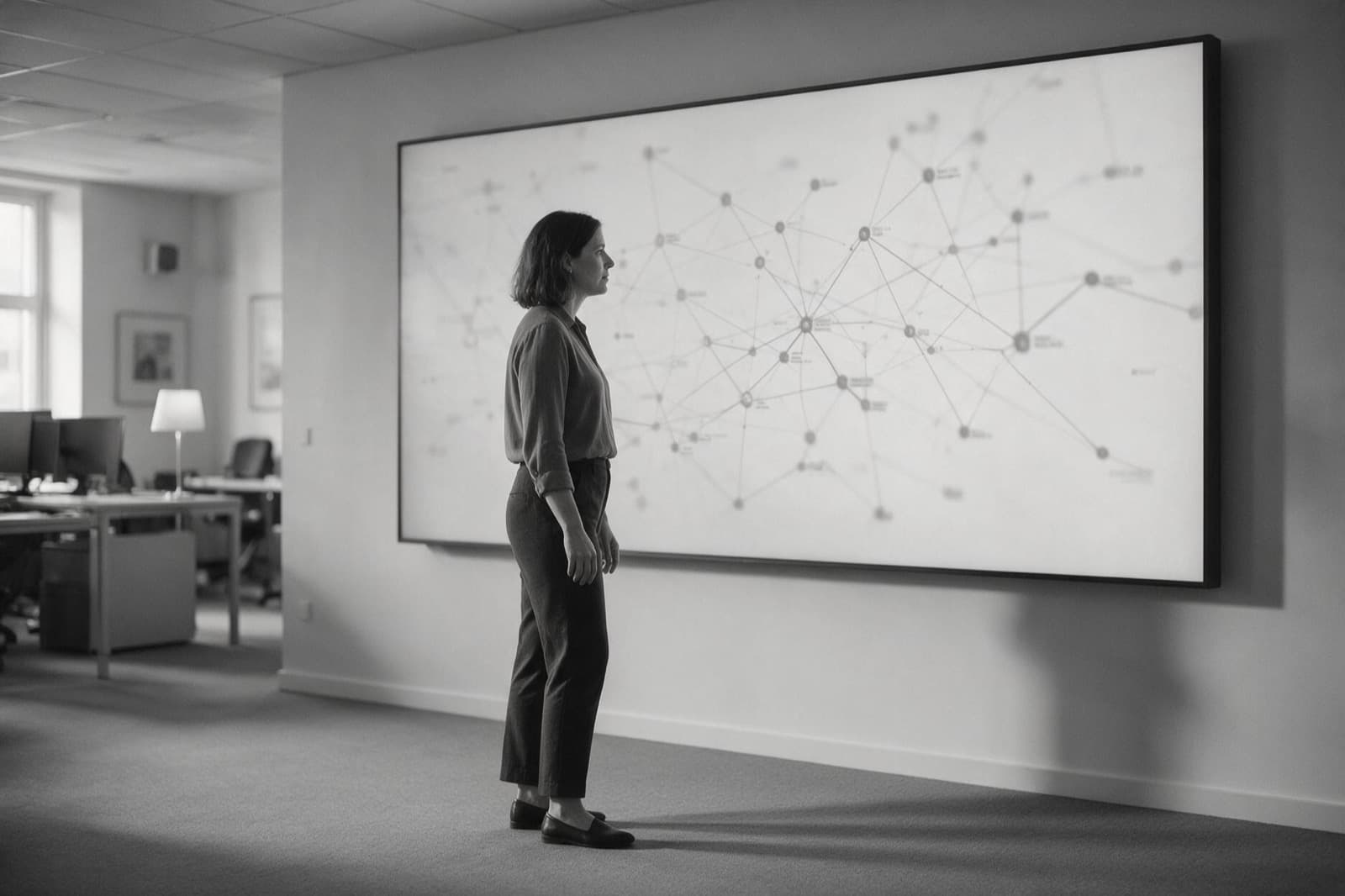
The map was built on three observable characteristics: the chronology of the materials' appearance, the reference structure, and textual coincidences. All three are described without identifying individuals and rely on publicly available data.
The resulting picture was typical of campaigns of this kind and at the same time not obvious to the client. The number of publications significantly exceeded the number of independent sources: a substantial part of the materials reproduced a limited set of primary sources, referencing one another in a circle.
A reservation is necessary here, and we state it directly. Such a structure allows an assessment of the probability of coordination but does not prove it. Similarity of wording may also be explained by borrowing without any agreement. In the report, this conclusion stands as an assessment with an indicated degree of confidence, not as an established fact.
The hypothesis of involvement of any specific party, including any assumptions of outside participation, was separately and deliberately not examined. Such claims require official confirmation, which was absent, and a private investigation does not substitute for it. No hypothesis of this kind was formulated or tested.
Risk assessment for the family and professional role
The campaign affected not only the client's professional role. This changes the nature of the work: where the immediate circle is concerned, the priority is not evidentiary completeness but safety and minimal interference.
We adhere to a strict rule here. No information about family members, their whereabouts, routines or circumstances was collected beyond what was necessary for the risk assessment, and none was included either in the public version of the material or in the report beyond the necessary extent. This text says nothing about them, and that is a deliberate decision, not an omission.
The assessment came down to three questions. What information about the immediate circle is already publicly available, and through what channels it got there. What of this can be reduced or closed off without abrupt action. And what signs would indicate that the situation had ceased to be a matter of information alone.
The last point was addressed separately and in writing. If signs of a direct threat to life or health appear, the matter immediately ceases to be private: the proper addressee is the police and the authorized bodies of the relevant country. A private company does not hold their powers, does not replace them, and must not attempt to.
The professional part of the assessment was structured differently. Here it was important to understand which circles the campaign had actually reached and what decisions might be made on that basis before a documented rebuttal appeared. This time frame determined the priorities of all the rest of the work.
What is confirmed, what is assessed, and what remains a limitation
Confirmed
documentary or technical basis- duration of engagement: 18 days
- jurisdictions involved: Lithuania, Poland, Czech Republic, Ukraine, Germany
- recording of primary materials together with accompanying technical data
- a written list of excluded actions
- consistent indicators of alteration in part of the materials
- provision of a conclusion and chronology to the client's legal counsel
Assessed
analytical conclusion with an indication of confidence level- division of materials into intact and altered - high confidence for part of the dataset
- reconstructed chronology of the materials' appearance - high confidence
- the number of independent primary sources is substantially smaller than the number of publications - high confidence
- presence of coordination between platforms - medium confidence, an assessment, not a fact
- excessive availability of the client's working materials - medium confidence
Limitation
what cannot be stated publicly- the client and the organizer of the campaign were not established and are not asserted: this is a matter for the court
- the identities of the owners of anonymous accounts and platforms were not established
- signs of alteration - a technical fact, not proof of falsification and not proof of intent
- the hypothesis of external involvement was not formulated and was not verified: such statements require official confirmation
- cessation of publications - the client's observation, not an established result and not proof of a causal connection
- political affiliation, subject of activity, content of publications and names are not disclosed to any extent
The public version of the panel is anonymized. The content of the publications, sources, platforms, names and verification methods are not published; the wording given describes the structure of the work, not its content.

Legal and communications response
The response format followed from the result: since the key conclusion was technical, the conversation had to be conducted on legal ground, not in public debate.
The materials were provided to the client's legal counsel in a form suitable for procedural use: recorded primary materials, a conclusion on indicators of alteration with confidence levels separated out, a described chronology and distribution structure, and a list of what could not be established.
Further action - approaches to platforms, demands and any procedural steps - was handled by legal counsel. We did not take part in this and did not act on the client's behalf: this division of roles is not a formality but a condition for the check to retain its value.
Public communication was kept to a minimum and built on one principle: not to restate the allegations. Refuting them point by point inevitably reproduces what it refutes and widens the circle of those aware of it. Substantive engagement with anonymous materials almost always works in favor of their author.
We separately record what we do not assert. We did not establish, and do not assert, that the campaign was organized by a specific person, organization or party. We do not assert that distribution stopped as a result of the measures taken: according to the client's observations, no new publications appeared after the legal approaches, but the causal link here is not proven and may have other explanations. This is the client's account, not a finding of the check.
Reducing the risk of a repeat campaign
First. Regular monitoring of the information background. Campaigns almost never start loudly: time usually passes between the first inconspicuous mentions and a noticeable stage, and that time is a resource. Detecting the start earlier means recording materials before they begin to disappear and be edited.
Second. A predefined procedure. Who receives the signal, what is recorded immediately, who is authorized to decide on a public response, at what point legal counsel becomes involved. In a crisis, the procedure is executed, not invented.
Third. Information discipline around working materials. Altered documents are most often based on genuine working files rather than invention: altering an existing document is easier and more convincing than creating one from scratch. Narrowing access to working materials is the most underrated preventive measure.
Fourth. Dividing roles in advance. A person who has become the target of a campaign should not simultaneously be its analyst and its voice of response. Combining these roles worsens both the assessment and the communication.
Fifth, and this is a limitation. None of these measures guarantees that a campaign will not recur. They reduce response time, preserve evidence and reduce harm - but they do not remove the possibility itself.
And last. Eighteen days and the described procedure are the circumstances of this example, not a standard. A different situation may require substantially more time, and an honest result of a check is often a conclusion that there are no indicators of alteration of the materials.
Does this apply to your situation
Signs of a task to be resolved through forensics and legal documentation, not a public response. This is not a diagnosis and not a promise of a result.
- the distribution spans several jurisdictions and platforms
- among the materials being distributed are documents, and it is unclear which of them are genuine
- the number of publications is growing, while no independent sources are visible
- the materials will be needed by lawyers or authorized bodies in a procedurally usable form
- there is a risk that publications will be deleted or edited before they are documented
- the campaign affects not only the professional role but also the close circle
If there are signs of a direct threat to life or health - yours or that of your family - the proper addressee is the police and the authorized bodies of the relevant country. A private company does not hold their powers and does not replace them.
Questions and answers
Documentation must precede response: materials online are edited and deleted, and what is not documented soon survives only as retelling. The original form of the material should be preserved together with the accompanying technical data and the moment of capture, and further work should proceed only with copies. The form of documentation must be designed for lawyers, otherwise what has been collected will prove useless in a procedure.
Partially and not always. It is technically possible to resolve the question of media integrity: whether the document corresponds to what it purports to be. Stable signs of alteration are usually detectable, but some materials always remain undetermined, and this is stated directly. At the same time, establishing who made the alteration falls outside the scope of a private check, and the qualification of forgery falls within the competence of the court.
On three observable characteristics: the chronology of the materials' appearance, the reference structure of publications to one another, and textual coincidences. All three are described on the basis of publicly available data and without establishing identities. The result usually shows that independent primary sources are substantially fewer than publications. The presence of coordination remains an assessment with a stated level of confidence, not an established fact.
Document the materials, verify the integrity of the documents and assess the actual reach. A public response before this risks becoming a substantive polemic with anonymous materials: a point-by-point rebuttal reproduces the accusation and widens the circle of those aware of it. A counter-campaign is inadmissible on its own: it turns the affected party into a participant and devalues the ability to speak through documents.
The main measure is to reduce publicly available information and avoid abrupt actions that themselves attract attention. Information about close persons should not be collected or retained beyond what is necessary for risk assessment - this applies also to those who provide assistance. If signs of a direct threat to life or health appear, the matter ceases to be an information matter and the proper addressee is the police.
Documented primary materials with technical data and the moment of capture; a conclusion on signs of alteration with levels of confidence separated; a described chronology of appearance and the structure of distribution; a separate list of what could not be established. This last point is no less important than the others: a conclusion without stated limitations loses value at the first check within a procedure.
How to read this material
BLACKFILE works with publicly available materials and with what the client obtained lawfully and provided itself. The company separates the confirmed, the assessed and the unestablished, and states the limitations of the data obtained. BLACKFILE does not establish the client behind a campaign, does not establish the identities of the owners of anonymous accounts, does not gain access to other parties' systems and correspondence, does not act on the client's behalf in legal proceedings, and does not replace authorized bodies.
A composite example based on typical matters; details have been changed. The material does not disclose the client, participants or circumstances of a specific project. Political affiliation, subject of professional activity, content of publications, names, platforms, sources and verification methods are fully and deliberately excluded. Information about the close circle is not provided to any extent.
The result depends on the source materials, the jurisdiction and the factual circumstances. The timeframe and procedure described here are not a standard and do not carry over to other situations. An honest result of such a check is often a conclusion that there are no signs of alteration in the materials.
The material is for informational purposes, does not constitute legal advice and cannot be used as a guide for preparing or verifying documents. BLACKFILE does not establish guilt, does not qualify forgery, and does not guarantee identification of the source of distribution.
Similar cases
What to read next if your situation is closer to another type of task.
 BF-012Corporate blackmail and pressure on the CEOif the campaign is directed at the company's executive ahead of a transactionpre-deal pressurenature of the matter16 daysengagement duration4 jurisdictionsгеография
 BF-011Verification of signs of surveillance and risk assessmentif the pressure is felt outside the digital environment and concerns movementsrisk assessmentnature of the matter12 daysengagement duration3 jurisdictionsгеография
 BF-003Documenting the factual circumstancesif it is necessary to record what is happening inside the organization, rather than around the personcorporate disputenature of the matter26 daysengagement duration4 jurisdictionsгеография
Is a campaign against you unfolding in the public domain?
Describe the situation in general terms: when the first mentions appeared, whether documents are among the materials being distributed, and in which countries the distribution is recorded. Do not send the materials themselves, documents or information about third parties through the initial form. BLACKFILE will assess the legal basis of the task and the possible engagement format.
If there are signs of a direct threat to life or health, contact the police. Do not send personal data and materials through the initial form.